 Your 1 Day Floor is now PolyPro Coatings!
Epoxy floor coatings have been around long enough that most homeowners have heard of them. What's less well-known is that the chemistry behind those glossy garage floors actually traces back to industrial laboratories in the 1930s — and that the technology has changed more in the last decade than in the previous half-century.
Where epoxy came from
The first epoxy resins were synthesized in the late 1930s, independently in Germany and Switzerland. The original goal had nothing to do with floors — chemists were chasing better adhesives and electrical insulators for the rapidly industrializing world. By the 1940s, two-part epoxy systems were being used to bond aircraft components and seal electrical assemblies in radios and early computers.
The defining property — and the one that eventually made epoxy useful for flooring — is that it cures through a chemical reaction between a resin and a hardener. Mix them together and the molecules cross-link into a rigid, durable polymer. No solvents evaporate. No heat is required. The result is a coating that's tougher and more chemical-resistant than anything paint-based.
From factories to garages
Industrial buildings adopted epoxy floor coatings in the 1960s and 70s — first in laboratories and food-processing plants where contamination control mattered, then in warehouses and aircraft hangars where chemical and abrasion resistance were the draw. For decades, epoxy floors were strictly a commercial-industrial product. You'd see them in a chemistry building or a brewery, never in a private home.
That changed in the 1990s and early 2000s, when manufacturers began packaging epoxy as a DIY garage-floor kit. Suddenly, the same chemistry that protected factory floors was available at every big-box hardware store for under $100. Homeowners liked the look — glossy, almost showroom-grade — and the price point made it feel like a weekend project.
What the box-store kits got wrong
The DIY boom revealed a problem the industrial world had quietly known for decades: epoxy is unforgiving. It bonds well to perfectly prepared concrete and poorly to everything else. Most garage slabs have surface contamination, micro-cracks, and a fine layer of concrete dust that no broom and degreaser can remove. Without diamond grinding to mechanically open the pores, the coating bonds to the dust — and then peels off in sheets within 1-3 years.
Epoxy has other failure modes too:
- UV yellowing. Direct sunlight (or even bright fluorescent garage lighting over time) causes traditional epoxy to amber and discolor.
- Hot tire pickup. A tire sits on the floor at 150°F+ after a summer drive, slightly softens the epoxy, then peels a patch up when the car moves.
- Cold-weather brittleness. Below 50°F, epoxy gets stiff and prone to crack-propagation from thermal cycling.
- Slow cure times. Most kits need 3-7 days before vehicles can return — a non-starter for daily-driver garages.
None of this was a problem in a temperature-controlled factory floor. All of it is a problem in a residential garage.
The polyaspartic revolution
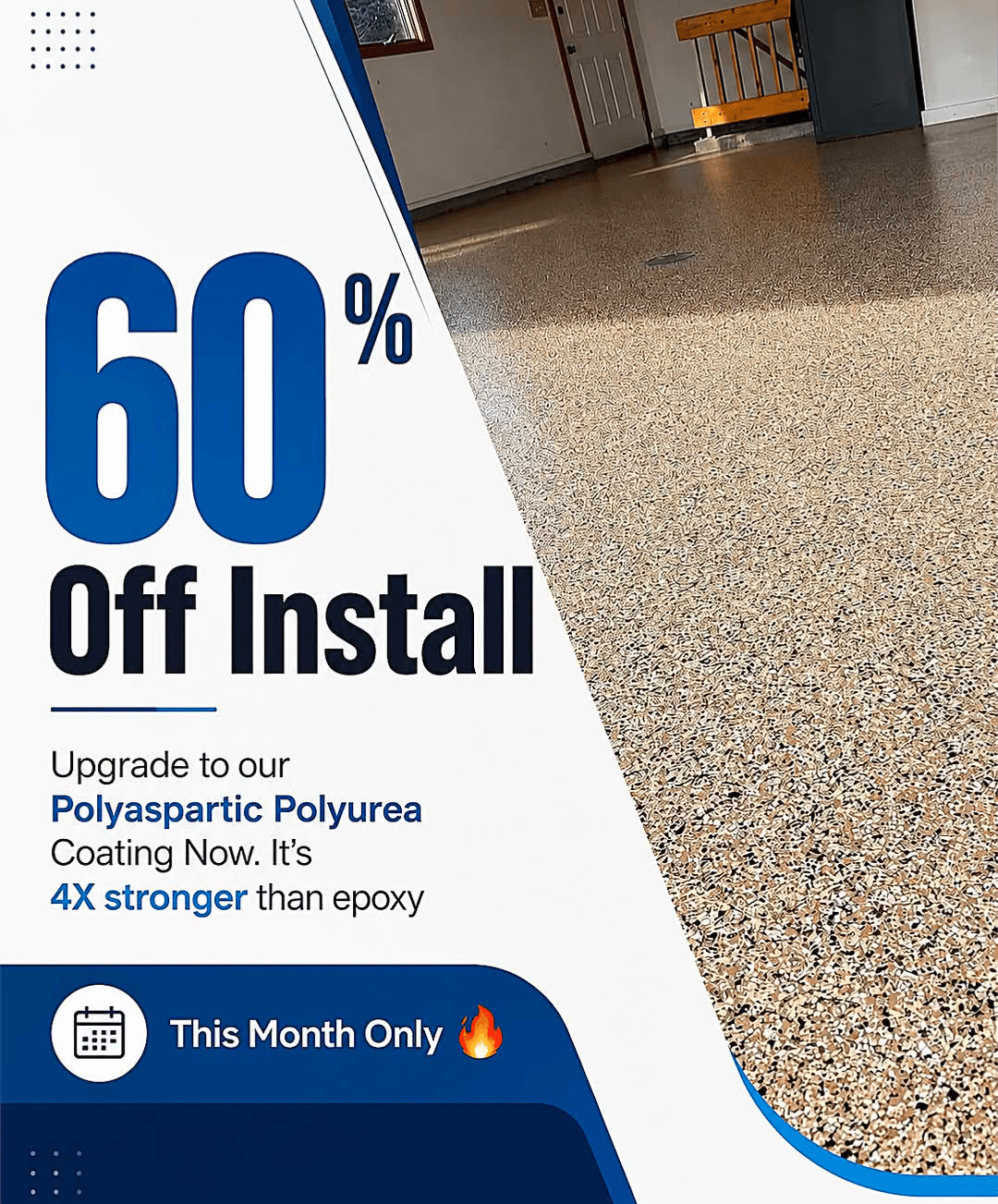
In the late 1990s, a related polymer chemistry called polyaspartic polyurea started making its way out of the bridge-coating industry (where it was being used to weatherproof exposed steel) and into the floor-coating market. Polyaspartics solved nearly every failure mode of traditional epoxy in one stroke:
- UV-stable. They don't yellow in direct sunlight. Ever.
- 4× stronger and more flexible. They flex with the concrete instead of cracking, and shrug off hot tires, chemicals, and impact.
- Fast cure. A full system — basecoat, flake broadcast, topcoat — cures in hours, not days. You can walk on the floor the same evening.
- Wider temperature window. They can be installed and cured across a much broader range of garage and basement temperatures than epoxy.
The chemistry was expensive at first, and required trained applicators using calibrated mixing equipment, so it stayed mostly commercial for a decade. By the mid-2010s, the systems had matured and the install workflow had been refined into something a skilled crew could complete in a single day on a residential garage.
So where does epoxy fit today?
Epoxy still has its place — primarily in temperature-controlled commercial environments where UV exposure isn't a factor and there's no rush to get back into service. For warehouse aisles, lab floors, and food-prep areas where speed and weather don't matter, a quality industrial epoxy is a fine choice and can last 10+ years with proper prep.
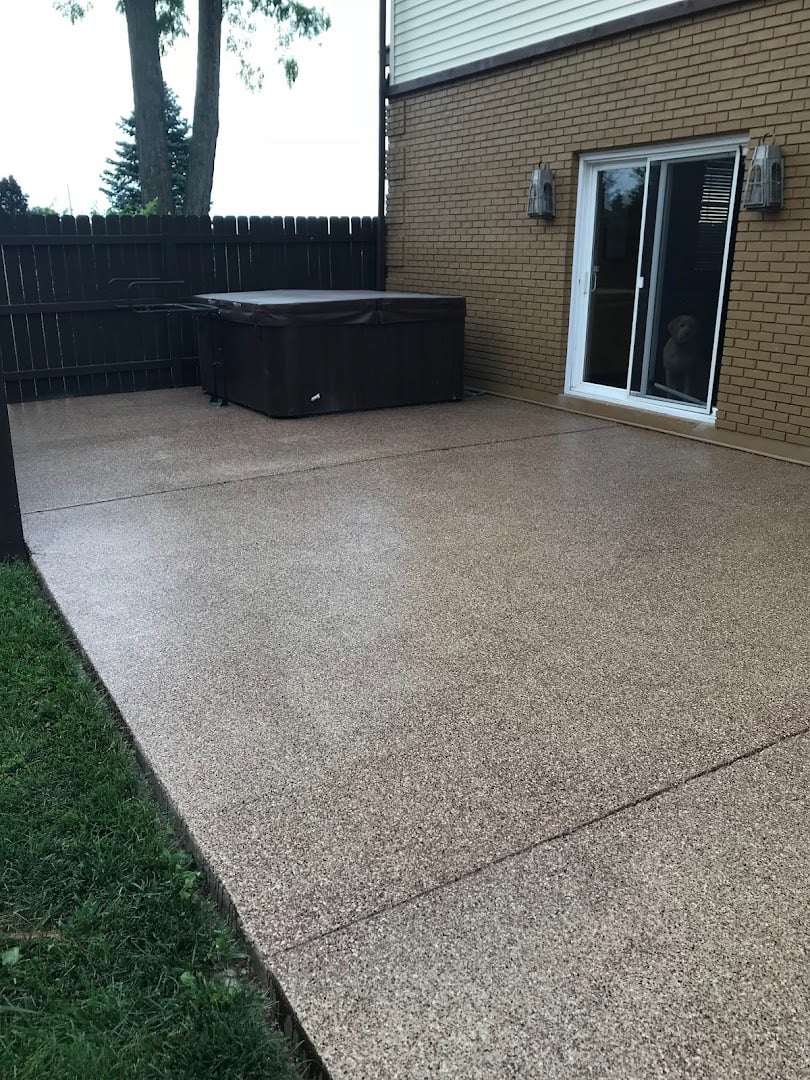
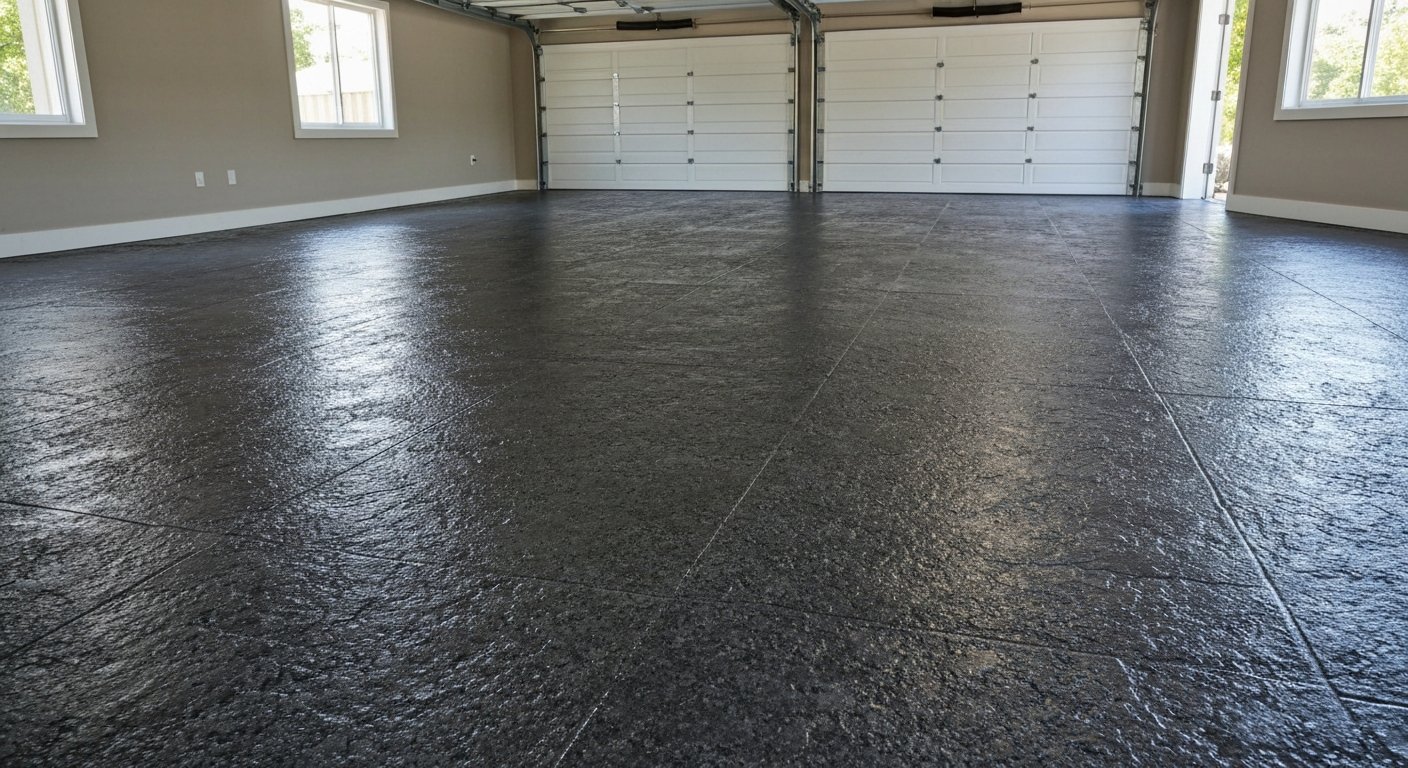
For residential garages, basements, patios, and pool decks — anywhere sunlight, hot tires, and freeze-thaw cycling enter the picture — polyaspartic is the modern answer. It's what the original DIY epoxy kits were trying to be, finally engineered the right way.
How we use this history
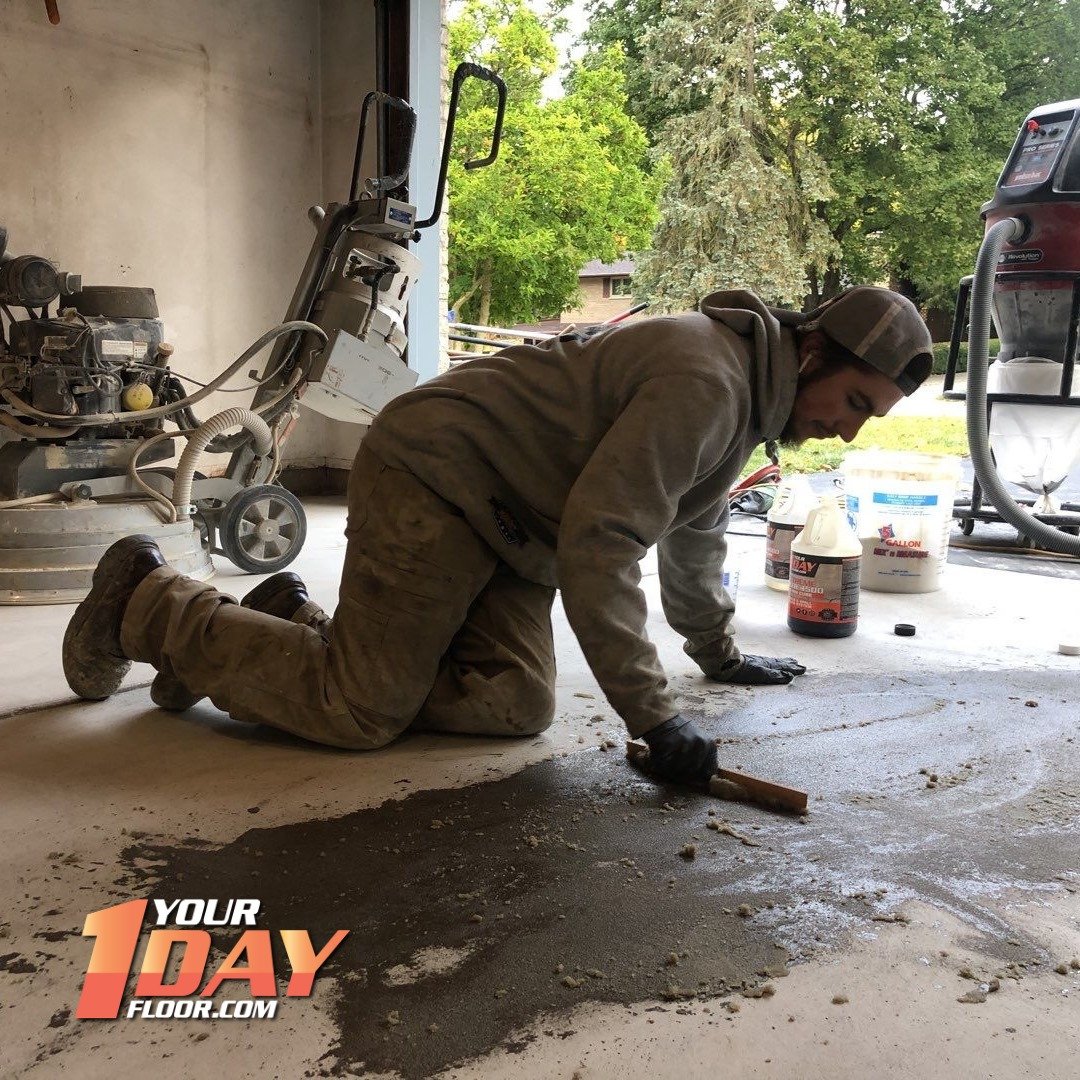
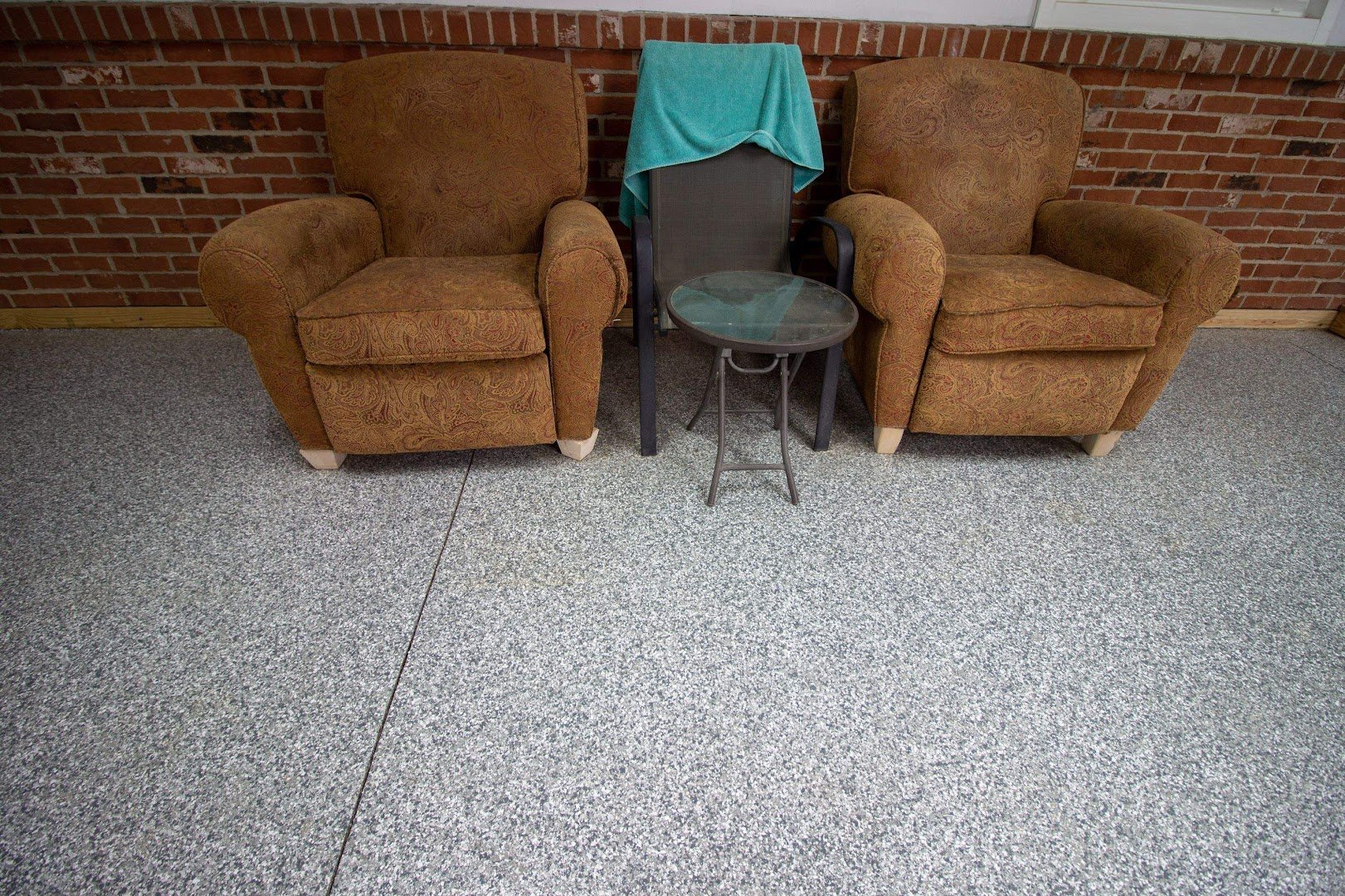
At Your 1 Day Floor, every system we install uses polyaspartic polyurea chemistry — not the older epoxy formulations sold in DIY kits. We diamond-grind every slab to open the concrete pores for a permanent mechanical bond, broadcast vinyl flakes for color and slip resistance, and finish with a UV-stable polyaspartic topcoat that cures in hours. The whole install wraps in one day, and the floor comes with a 15-year residential warranty.
The history of epoxy is a story of a great industrial product that got pushed into a residential use case it wasn't designed for. The good news is the chemistry has caught up.
Want to see what a modern polyaspartic floor looks like in person? Schedule a free in-home estimate — we'll bring color samples, walk through the install process, and give you exact pricing on the spot.